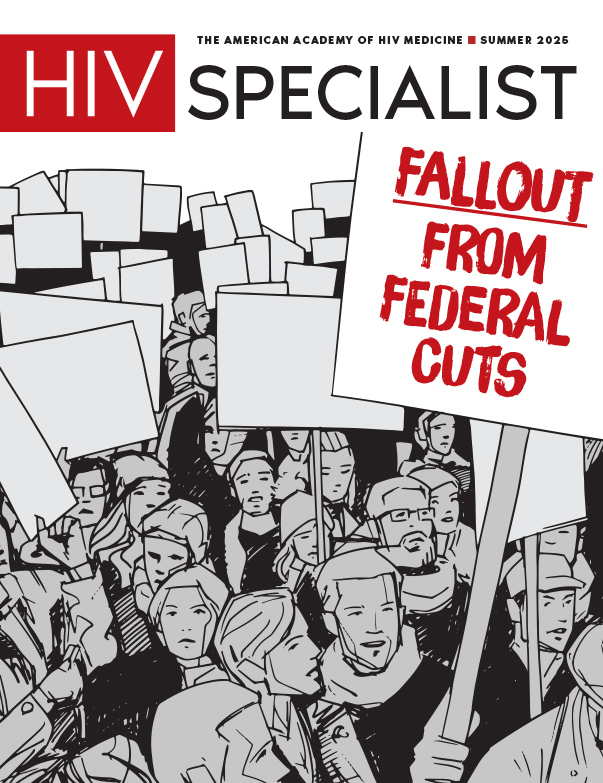
President Donald Trump has a stated mission to “drain the swamp” or, in other words, to rid our society of unnecessary or unneeded programs that add to governmental expenditures. It seems apparent that wasteful spending of taxpayer revenue is, and has been, of major concern to the citizens of the United States (U.S.) for many years. No one doubts that program efficiency and objective oversight are of paramount importance to optimizing the use of tax dollars. Yet the current presidential administration has employed the concept of cost cutting without any deliberate consideration of the negative impacts that will be realized in the near future.
It should be noted that during his first presidency, President Trump had committed to ending the HIV epidemic by the year 2030. That aspiration—whether it was a realistic intention or mere pacifying rhetoric—is a distant memory, now strangled by present-day notions of eliminating diversity, equity, and inclusion (DEI) initiatives and the demonization of our transgender population. I penned an article in the April 2019 edition of the HIV Specialist magazine that questioned the presidential commitment to fulfilling this promise. Peer-reviewed data suggests that his initiatives were minimally effective.1 Yet, President Trump’s current administrative efforts to balance the budget by cutting funding to HIV programs portend a bleak future for HIV diagnosis, prevention, and treatment. Because of this, it now appears that the effort to protect members of our community will be a protracted battle.
The First Trump Presidency
President Trump had embarked on establishing lofty goals during his first presidency. He set the stage for his initiatives during his State of the Union speech on February 5, 2019.2 One of the goals was the elimination of the HIV epidemic by the year 2030. His proposal titled “Ending the HIV Epidemic: A Plan for America” sought to reduce new HIV infections by 75 percent within the first five years and 90 percent by 2030. This ambitious 10-year plan centered on targeting HIV “hotspots,” 48 geographical areas in the U.S. that accounted for 50 percent of all new HIV infections. A data driven strategy would guide this initiative to facilitate prevention, treatment, and care. The fundamental strategic approach would be tailored to community needs and involved four major themes to be implemented in three phases:3,4
1) Diagnose all individuals with HIV as early as possible after infection.
2) Treat HIV infection rapidly after diagnosis and effectively in all people who have HIV, to help them get and stay virally suppressed.
3) Prevent HIV infections using proven prevention interventions, including pre-exposure prophylaxis (PrEP) and syringe services programs.
4) Respond rapidly to potential HIV outbreaks to get prevention and treatment services to people who need them.
President Trump also proposed a multiyear monetary allocation to bolster this initiative. This would provide the Centers for Disease Control and Prevention (CDC) with $140 million and the Health Resources and Services Administration (HRSA) with an additional $120 million for the Ryan White HIV/AIDS program. There was also additional multimillion dollar funding of projects designated toward HIV minority-based programs. The U.S. had been spending $20 billion dollars domestically for HIV/AIDS annually, and the additional funding initiative would provide the means to achieve his stated goal. However, one month after that speech, Republican-sponsored legislation under President Trump’s administration proposed significant cuts in both global and national funding of all HIV-related programs.5
The concept of such a grand and noble project to eliminate HIV/AIDS by the year 2030 appeared fundamentally ideal. Yet, merely providing billions of dollars does not necessarily guarantee success. In my article, Ending the HIV Epidemic: Notes From a “Hot Spot,” published in the April 2019 issue of HIV Specialist magazine, I was more than skeptical of simply providing more money to combat the problem of ending HIV/AIDS.6 This had already been attempted on a global scale, amounting to $100 billion dollars without any appreciable change in infection rates.7 Data from the CDC does show a modest decline of between 12 to 21 percent of new HIV infections in targeted geographic areas over the past five years.1 However, funding and implementation of programs, as well as the disparate populations served through the initiative make an overall assessment difficult.
The Second Trump Presidency and HIV
President Trump’s second term starting in 2025 has all the appearances of an impending crisis for HIV/AIDS funding. Massive funding cuts to the CDC and National Institutes of Health (NIH), amounting to billions of dollars, will severely hamper progress in eradicating HIV. His short-lived initiative to end HIV/AIDS by 2030 is now replaced with fervent dismantling of any federal program that promotes DEI. These budget cuts are expected to profoundly hamper or completely eliminate HIV research, treatment, prevention, and global aid. According to AIDS United, a national non-profit based in Washington D.C., well-established programs that are cornerstones of assistance to the HIV community will all but disappear and include the following:8
- Ryan White HIV/AIDS Program: Proposed elimination of Part F, which funds various programs.
- CDC’s Global Health Center: Complete proposed elimination.
- Housing Opportunities for Persons with AIDS (HOPWA): Proposed consolidation and a two-year cap on services for unhoused individuals.
- Substance Abuse and Mental Health Services Administration (SAMHSA): Proposed cuts that would lead to its dissolution and reconstitution within a new administration.
The consequences for these budgetary actions raise concerns for increased HIV infections and death through the weakening of HIV prevention measures. There is also the potential for exacerbation of health disparities that will disproportionately affect vulnerable populations.8 The impending proposed budgetary shortfall combined with President Trump’s tariffs will create an additional loss of funds that currently provide services to HIV prevention and treatment of the undocumented immigrant population.
One such example of this crisis can be found in the California’s Medicaid enrollment, called Medi-Cal, which will freeze enrollment of coverage to new undocumented immigrants and will raise premiums to those who are already enrolled.9 Larger community centers that provide essential services for HIV prevention and treatment, such as St. John’s Community Health in Los Angeles, Calif., will likely weather the storm successfully as they have done so in the past. However, smaller clinics and outreach programs may not survive these draconian funding cuts, although they will most likely seek financial assistance from state funding to keep their doors open.10
Conclusion
The progress that the HIV community has made over the past 30 years faces demanding challenges to protect access to preventative care and treatment. The Trump administration seeks to slash essential funding that would allow timely and effective services to those in need. The greatest loss of progress will affect marginalized communities. People of color, and the trans community are projected to experience the brunt of budgetary cuts and subsequently fall victim to the demonization of DEI by the Trump administration. The proposed financial support by the Trump administration in 2019 has evaporated. Larger clinic systems will likely survive through innovation and governmental assistance, whereas smaller clinics will rely on significant state support to continue vital services.
These next few years will be a battle for survival in the HIV community. This can be compared to Russia’s unprovoked attack on Ukraine. Russia’s persistent use of force on a weaker community causing unnecessary loss of life prompted President Trump to post “Vladimir, STOP!” on his media service Truth Social. The HIV community at large must also raise our collective voices against DEI aggression and the real possibility of increases in HIV infections and deaths, and shout loudly, “Donald, STOP!”