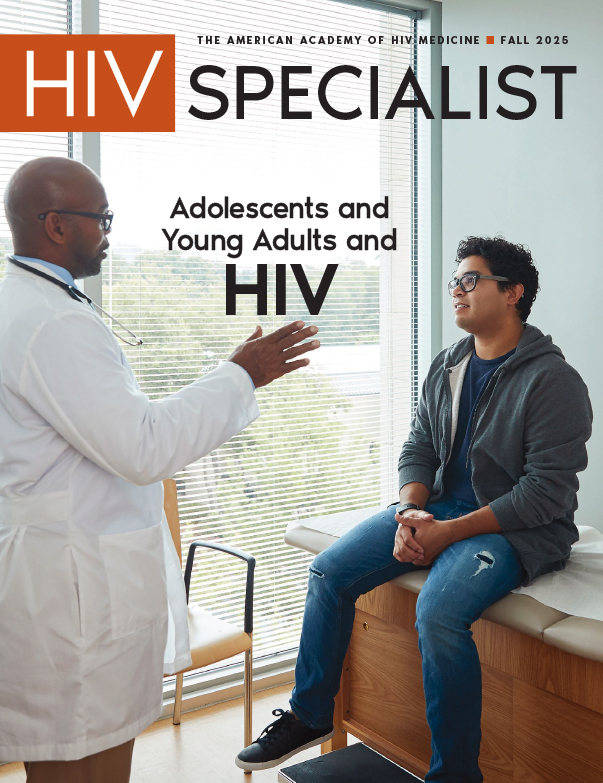
I provide HIV care in Fresno, Calif., the third-highest incidence city for HIV in the state. In my clinic, I recently saw an 18-year-old who was newly diagnosed with HIV. When I asked if he had ever taken PrEP (pre-exposure prophylaxis), he looked surprised and said, “What is PrEP?”
That moment underscored what many of us already know: HIV prevention for adolescents and young adults (AYAs) remains inadequate. Too often, clinicians discuss unprotected intercourse and contraception but do not mention PrEP. HIV is not a condition of behavior but a disease of resources, and it is our responsibility to expand those resources. The conversation must begin in our exam rooms. Include PrEP in every discussion about contraception, STI screening, and sexual health. Patients rarely ask about PrEP—because they often do not know it exists. It is up to us to educate them.
AYA Risk is Unique
Adolescents and young adults face unique biological, behavioral, social, and structural factors that elevate their risk of HIV acquisition. Clinicians can translate evidence into actionable practice by integrating prevention, PrEP as well as PEP (post-exposure prophylaxis), testing, and youth-friendly care delivery. Confidentiality, nonjudgmental communication, and integrated services are critical to improving testing and prevention uptake.¹
Why AYAs are at Differential Risk
Biological susceptibility. Hormonal changes, mucosal immaturity, and higher prevalence of sexually transmitted infections (STIs) increase acquisition risk.² STI co-infections magnify local inflammation and target cell recruitment.
Behavioral patterns. Lower condom use, higher likelihood of multiple partners, and peer or venue-based exposure elevate risk. Delayed HIV testing leads to late diagnoses and missed opportunities for prevention.³
Substance use and mental health. Alcohol, stimulants, and cannabis impair judgment. Depression, trauma, and anxiety reduce adherence to PrEP and treatment.⁴
Structural and social determinants. Stigma, poverty, unstable housing, and lack of youth-friendly services remain major barriers.⁵ Housing instability, poverty, and school/work pressures disrupt continuity of care.
Cultural humility and subpopulations. Young men who have sex with men (MSM), Black, Indigenous, and Hispanic youth, and transgender/nonbinary youth carry disproportionate burdens.⁶
Mitigating Risk Factors
Below are some best practices for adolescent HIV prevention.
- Establish trust and confidentiality. Explain confidentiality at every visit. Interview adolescents directly and privately, including their concerns (e.g., mandatory reporting of abuse).⁷
- Use structured frameworks. Apply the HEEADSSS assessment and the 8 Ps sexual history.⁸ Ask open-ended questions and avoid assumptions about sexual orientation, gender identity, or partner gender.
- Normalize HIV testing. Screen all patients 15 and older as a standard practice. Retest at least annually, more often for high-risk patients.⁹
- Affirm identity and reduce stigma. Use chosen names and pronouns. Acknowledge unique risks for LGBTQ+ youth.¹⁰
- Prioritize prevention.
- PrEP: Assess eligibility, formulations (daily vs event-driven 2-1-1), adherence, and monitoring. Provide same-day initiation when possible.¹¹
- Event-driven PrEP (2-1-1). Consider for sexually active individuals with infrequent sex, where guideline-supported; ensure understanding and access.
- PEP: Ensure rapid access within 72 hours of exposure.
- Condoms/vaccines: Offer condoms, lubricants, and catch-up vaccines (HBV, HPV).
- Linkage to care.
-
- Initiate antiretroviral therapy promptly with adolescent- and youth-friendly approaches.
- Support adherence with tailored strategies: Text reminders, peer navigation, digital tools, and mental health supports.¹²
- Address transition planning to adult care early and coordinate with schools or guardians as appropriate for the patient’s context and confidentiality.
-
- Cultural humility and population considerations
-
- For young MSM, transgender, and nonbinary youth, use inclusive language, affirm gender identity, and ensure access to gender-affirming care and specific risk-reduction resources.
- In racial and ethnic minority AYAs, address structural barriers, provide culturally competent care, and connect with community-based organizations.
- In congregate or high-risk settings (e.g., detention, shelters), ensure discreet, easily accessible testing and prevention services; partner with facility health teams.
-
- Address broader social determinants. Screen for housing instability, food insecurity, mental health, and substance use. Connect patients to resources whenever available.¹³
- Ensure continuity of care. HIV prevention is not a one-time conversation; schedule follow-ups for ongoing risk assessment.¹⁴
Clinician Toolkit for AYA
Clinical Scenario
A 16-year-old nonbinary patient presents with their same-gender partner. They report multiple partners and inconsistent condom use. They have not been tested for HIV in a year and are curious about PrEP.
Action steps:
- Provide rapid HIV and STI testing.
- Discuss PrEP formulations; initiate same-day counseling and referral.
- Screen for mental health/substance use.
- Verify vaccination status.
- Schedule follow-up for adherence and ongoing risk assessment.