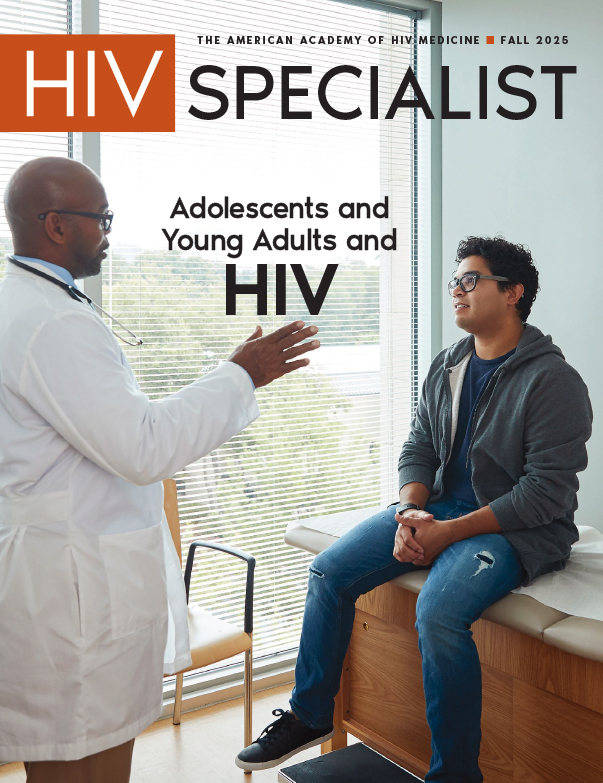
Despite exciting advances in HIV prevention and treatment in recent years, overall new HIV infections have been increasing.1,2 Adolescents and young adults (AYA) ages 13 to 34 are particularly impacted with new HIV infections, remaining the majority (55-59%) of all diagnoses since at least 2018.1,3 This age group, specifically those ages 13 to 24, have unique developmental, psychosocial, behavioral, and infrastructure-related factors that impact their engagement in care and HIV viral suppression rates.4 In fact, the Department of Health and Human Services HIV Guidelines specifically refer to AYAs as a special population due to these unique considerations, stating “Perhaps most important, AYA with HIV often do not have the same developmental capacity or ability to secure resources as their adult counterparts.”
Fortunately, because of targeted efforts by health care teams, the U.S. has seen some progress in HIV viral suppression for youth ages 13 to 24. In February 2025, the Centers for Disease Control and Prevention (CDC) reported a five-year improvement in viral suppression rates in this age group from 57.1 percent (2017) to 65.6 percent (2022).5 However, this remains well below the Ending the HIV Epidemic (EHE) goal of 95 percent by 2025 and continued efforts must be made to engage and retain AYA in HIV care.
A Novel Approach to AYA
Fifteen years ago in New Mexico, Michelle Iandiorio, MD, noted the disparity in access to care among AYA with HIV at a Ryan White clinic. While the clinic was well-versed at caring for adults, many of the social issues patients encountered, such as unstable housing and insurance access issues, were predominantly impacting the youth and young adults at that clinic. Many AYA patients, overwhelmed by commitments to school and work, were unable or unwilling to make multiple appointments with case managers, medical practitioners, and behavioral health specialists, regardless of their needs for these care visits.
Sensing an opportunity, Dr. Iandiorio and a group of committed, multidisciplinary colleagues began a clinic that was unique in its time. She notes: “Recognizing that attending multiple appointments would be a barrier for patients and recognizing that attending a specific time may be a barrier, the multidisciplinary Young Adult Clinic (YAC) with flexible scheduling was launched to include holistic and adaptable care.” By co-locating team members from various clinical disciplines, the Young Adult Clinic team sought to decrease care barriers by targeting the needs of this specific group. Their mission was to create “a multidisciplinary, culturally and developmentally sensitive, team approach to the care of adolescents and young adults…with HIV.”
Our YAC in New Mexico has grown since its inception and now includes a physician, clinical pharmacist, psychologist, psychiatric nurse practitioner, dietician, registered nurse, and multiple case and community health workers, all focused on AYAs ages 13 to 24. The interprofessional team recognizes the many specific barriers to care that prevent effective, consistent follow up for their AYA with HIV. While the larger clinic cares for nearly 2,500 people with HIV (PWH), the YAC follows between 60 to 80 AYA yearly. Patients “graduate” to adult primary care providers as they age out of YAC and become stable, while others remain in care until they reach stability.
In this article, we share stories from our practice to speak about the specific barriers facing our patients, which echo those of other groups across the country. While the names and details in our patient stories have been changed to protect identities, the themes and challenges highlight the larger barriers for trying to prevent and treat HIV in AYA, as well as our hopes for the future that this model can provide.
HIV Prevention: Just out of Reach
Knowledge of and access to HIV prevention among AYA is particularly challenging. Inadequate sexual health education leads many young people to underestimate their risk of sexually transmitted infections (STIs), particularly HIV.6,7 Pediatricians are often less familiar or comfortable with HIV prevention tools like HIV post-exposure prophylaxis (PEP) and pre-exposure prophylaxis (PrEP), potentially missing opportunities for further discussions around risk and harm reduction.8
For youth who learn about HIV PrEP and wish to obtain it, barriers are high. In our practice, many young adults have encountered challenges with obtaining and adhering to PrEP, ultimately leading to an HIV diagnosis. Many AYA are still on their parents’ insurance, leading to worries that explanations of benefits will disclose the clinic they visited or the services that they received, and often leading to AYA not accessing preventive care. Others rely on family members and guardians for transportation and monetary assistance. Consequently, copays for medications or labs, or attending clinic visits at sites across town become much more challenging.
Mark was 17 years old when he first began thinking about PrEP. Close to his parents, he discussed his concerns openly with them and planned to bring up starting PrEP at his next pediatrician visit in three months. Before he was able to attend this appointment, he developed a severe viral illness. He learned shortly thereafter that he tested positive for HIV.
Jose is another youth with an infectious smile and appreciation for life. At age 20, he first looked for PrEP services near his home on the Navajo Nation, more than one hour from the closest medical practitioner. He recalled to us that he asked his primary care practitioner about PrEP, who did not have enough knowledge about it, and later found himself educating the practitioner on PrEP’s indications. Jose eventually received and picked up an oral PrEP prescription, only to stop about a month later after difficulty obtaining refills. Six weeks after stopping PrEP, and two weeks after an encounter with a new partner, he developed fevers, chills, and a diffuse rash consistent with acute retroviral syndrome. By the time the YAC saw Jose for his first visit, he was already incredibly frustrated with the health care system and the lack of access to medications.
Medication Adherence: More than Just Pillboxes and Med Alarms
Staying on antiretroviral therapy (ART) is not as simple as continuing to take medications every day. Access to medications is heavily dependent on insurance coverage and pharmacy benefits, a complex concept about which many AYA are unaware. Continuing insurance coverage often includes submitting documents for Medicaid programs or selecting new plans and making payments for consumer products. Moreover, changes in income or coverage criteria, particularly after the passage of the One Big Beautiful Bill Act, make this a daunting task for some youth who believe their insurance to be active, only to find that it is not while trying to fill medications. Sadly, this happens all too commonly in our clinic.
Daniel was 24 years old when he learned of his HIV status after going to a local department of health office due to lack of insurance coverage. Although he is a U.S. citizen and was eligible for insurance through his employer, he had always balked at paying the monthly premiums when he had been healthy. Additionally, his annual income was over the annual maximum to be eligible for Medicaid coverage. During his initial visit to YAC for HIV care, Daniel received extensive information on HIV-related services from the YAC case managers.
They discussed the importance of health insurance, went through each step in the process to apply for insurance through the statewide exchange, and what services would be covered once coverage became active. Daniel agreed to get his documents and told the team he would sign up later that week. However, more than four weeks later at his follow up, he had not yet signed up for insurance and had run out of medications again. Ineligible for our state HIV drug assistance program, he was able to access ART through the manufacturer’s patient assistance program but was unable to access labs and medical care until insurance coverage was obtained.
Clinic Visits and Clinical Check-Ins: Barriers Beyond Just Transportation
For many of our AYA, barriers to health care access are not limited to transportation or insurance concerns. The young adult population also face severe housing instabilities, not uncommonly endorsing couch surfing or exchanging sex for a place to stay for the night. Patients also face significant challenges navigating the health care system and insurance complications, which limit motivation and access to care.
Star was one patient whose social struggles directly translated to difficulty with viral suppression. After living on her own for years near family, she moved with a romantic partner to get a new start in a new city. She stayed with this person until domestic violence threatened her safety and forced her to move in with a friend. However, when she lost her job, the friend asked her to move out as she could no longer pay the rent.
This instability in housing was, not surprisingly, impacting Star’s mental health and her medication adherence. She began to miss multiple doses of her once daily antiretroviral single tablet regimen as she was more concerned about where she would sleep at night. Although she noted interest in long-acting injectable ART, she also started missing clinic visits and the team was concerned that she would not be able to make her injection visits.
Many youth also have mental health concerns like Star began to experience, and other AYA use substances at higher rates. Substance use, in turn, can lead to more issues with medication adherence. Brent was 20 years old when he was diagnosed with HIV. Intermittently housed, he often engaged in survival sex work. To cope, he used various substances. As his substance use waxed and waned, his show rates at clinic would also fluctuate. Although he could recognize the chaos in his life caused by his ongoing substance use, he was unable to address the root causes of use. He often checked in with behavioral health teams when he came for medical appointments, often setting goals for himself and for future follow ups. However, he would remain lost to care for months at a time before returning to clinic with similar concerns.
Stigma: Still Present in 2025
Stigma surrounding HIV persists as one of the largest barriers to care, especially for our AYA with HIV who are still learning how to navigate not only adulthood but a new, lifelong diagnosis. Youth face even greater aversion to care for fear of judgment and discriminatory retaliation from peers and family members. They are also concerned about disclosure of their status and gender and/or sexual identity if they are seen at an HIV clinic, picking up medications from the pharmacy, or seen taking medications daily. This fear can lead to increased rates of anxiety, depression, and social isolation, making it increasingly difficult to keep this population in care and virally suppressed.
Jeff was 19 years old when he was diagnosed with HIV. As a self-identified gay person living in a small rural town, the support community available to him was incredibly limited, and that community seemed to shrink even further after his diagnosis. Although he started ART and became undetectable within months, the constant burden of taking medications weighed heavily on him. A year later, he came to clinic saying he wanted to discontinue medications due to the daily reminder of his HIV diagnosis these presented.
Successes and Triumphs Among Youth
“I really appreciate that there was a young adult clinic because it already felt…traumatic and hard…to be HIV positive at 19. So at least to know that there was like a place where that was kind of specifically meant for treating people like my age and my condition. It felt very good and welcoming.”
Despite the numerous challenges facing AYA, this group also has several strengths that contribute to resiliency. Youth today are often more tech-savvy, making connections with virtual support groups more feasible across the country. Youth are also more likely and able to connect with their practitioners virtually, increasing the ability to be seen despite transportation issues or difficulties with work and school schedules.
In our clinic, we also see successes worth celebrating. Viral suppression remains around 85 percent for our AYA, a testament to the hard work and relationship building of the interdisciplinary team on behalf of patients. At monthly meetings, our team gathers to discuss those at risk of falling out of care, or those nearing transition to adult practitioners. Specific outreach from case managers and community health workers reengages these young people, encouraging them to attend appointments, obtain their medications, and check in with the rest of the clinical team.
Many AYA “graduate” from our YAC to the adult clinic every year. This process is multifaceted, drawing input from the interdisciplinary team and AYA themselves. To improve this process, multiple young adults, both currently in YAC and some YAC graduates, participated in a focus group to provide information on better ways to affect care transitions. Their insights were incredibly valuable, spurring changes to the way the clinic communicated transitions and discussed the process. Two of these youth then joined the larger patient advisory board, continuing to lend their voices to quality improvement efforts at the clinic.
The Success of YAC
Some success stories continue to inspire us years later. At 15 years old, Raul was diagnosed with HIV at the local department of health office. When he came to our clinic, he stated clearly that he would not tell his father his diagnosis for fear of retribution. Undeterred by his diagnosis, he continued to attend school full-time while working evenings. He eventually disclosed his status to his mother, who was extremely supportive. Now, more than seven years since his diagnosis, he has disclosed his status to the rest of his family. He works a stable and well-paying job, and lives on his own.
Pablo was perinatally infected and was one of the first youth to join the YAC nearly fifteen years ago. Initially struggling with substance use and medication nonadherence, his care team continued to work closely with him through many ups and downs. After moving away for a time in late adolescence, he returned and asked to continue working with the team that had supported him for years. Now, after years of hard work, he is undetectable, working a regular job, and preparing to be a father.
The stories of our patients remind us of our shared humanity. As care practitioners, we are so fortunate to participate in small ways in their journeys through life. At times saddening, frustrating, and challenging, their stories also motivate us to continue, driving us to be better advocates for HIV screening, prevention, and early treatment, particularly in this population.